When to scout for tobacco aphids
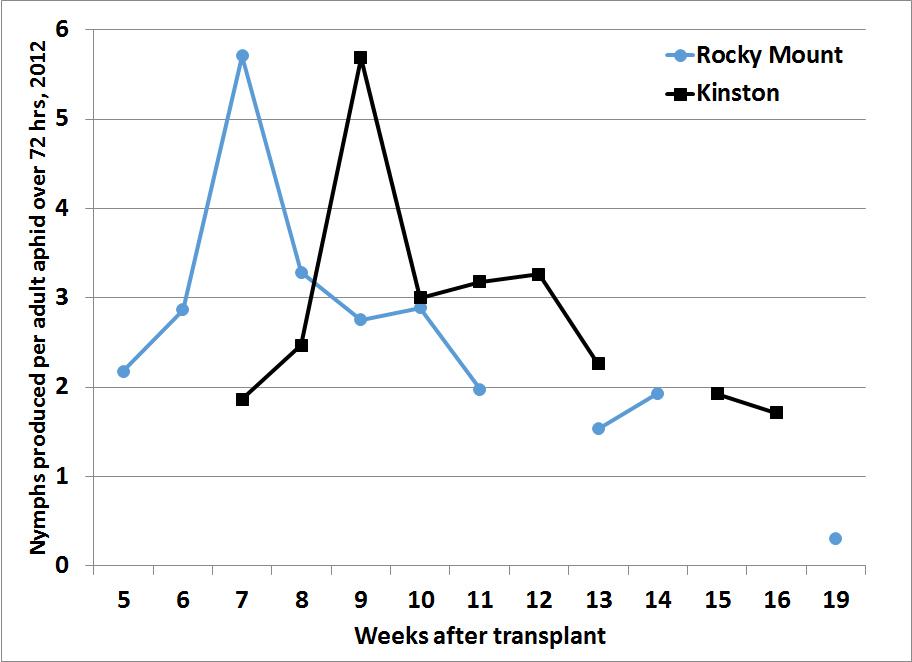
Green peach aphids may be present on tobacco plants from roughly 4 weeks after transplant through topping, but they are most common on plants from 6 to 8 weeks after transplant. Following topping, leaves mature and undergo both physical and chemical changes. Mature leaves are no longer attractive, suitable reproductive hosts for aphids, so therefore, aphids are rarely present in tobacco post-topping.
What part of the plant to scout for green peach aphids
Green peach aphids are found on upper stalk and developing leaves. They may also be present on flower heads prior to topping.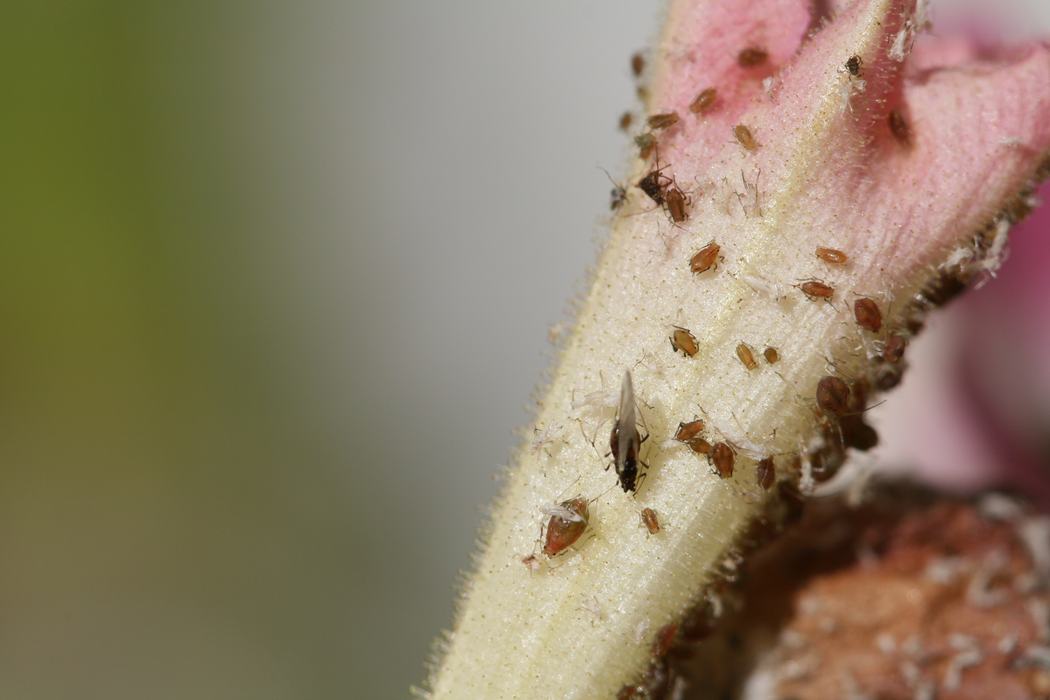
How to scout for green peach aphids
Carefully observe the undersides of leaves in the upper third of the plant for aphids. You may see dark green or black winged aphids on plants first. Winged aphids colonize plants, after which wingless aphids are produced. Do not include winged aphids in scouting data, as they may or may not establish on plants. Only count wingless, reproducing aphids when scouting. Reproducing female aphids will be surrounded by smaller nymphs.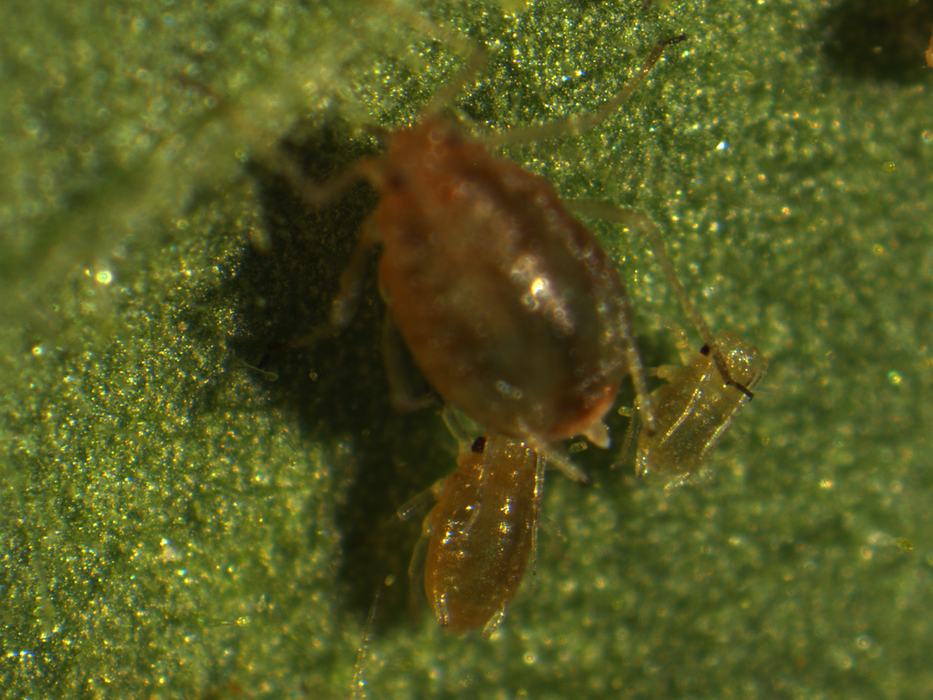
Shed aphid cuticle, or "skins" may also be present on plants. These cast skins can remain on plants long after aphids have died. Be careful to distinguish between cast skins and live aphids. Also be prepared to identify aphids parasitized by wasps. These aphid "mummies" contain developing wasp larvae and may also be present on plants long after reproducing populations. Aphid mummies are light brown, dull, larger, and rounded as compared to live aphids. They will not move if probed. Neither cast skins or aphid mummies should be included in scouting data.
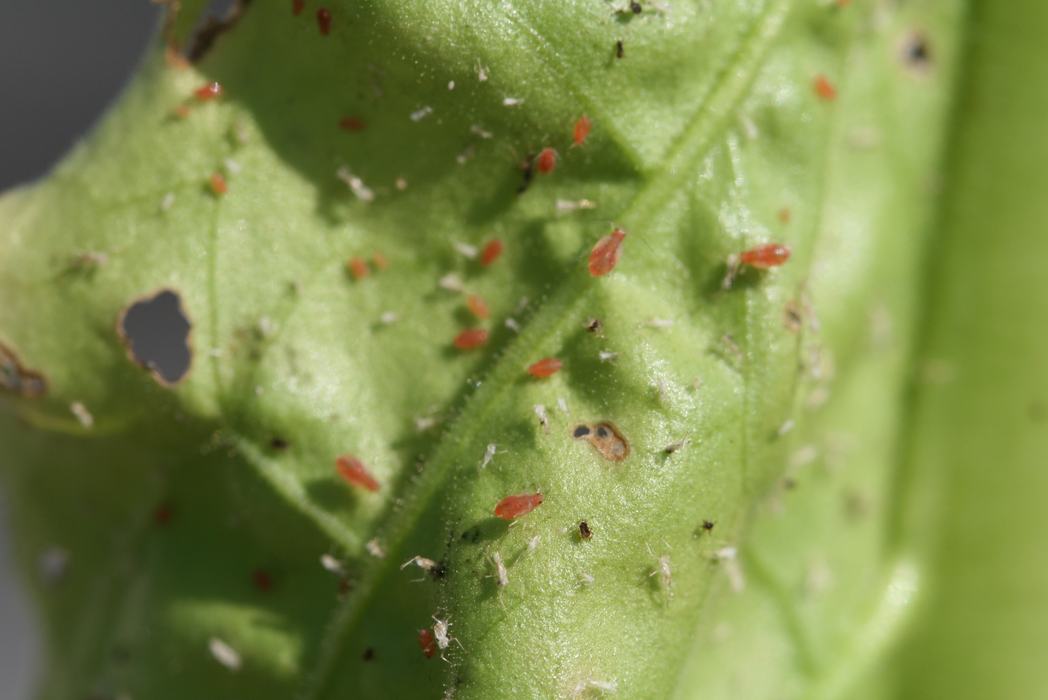
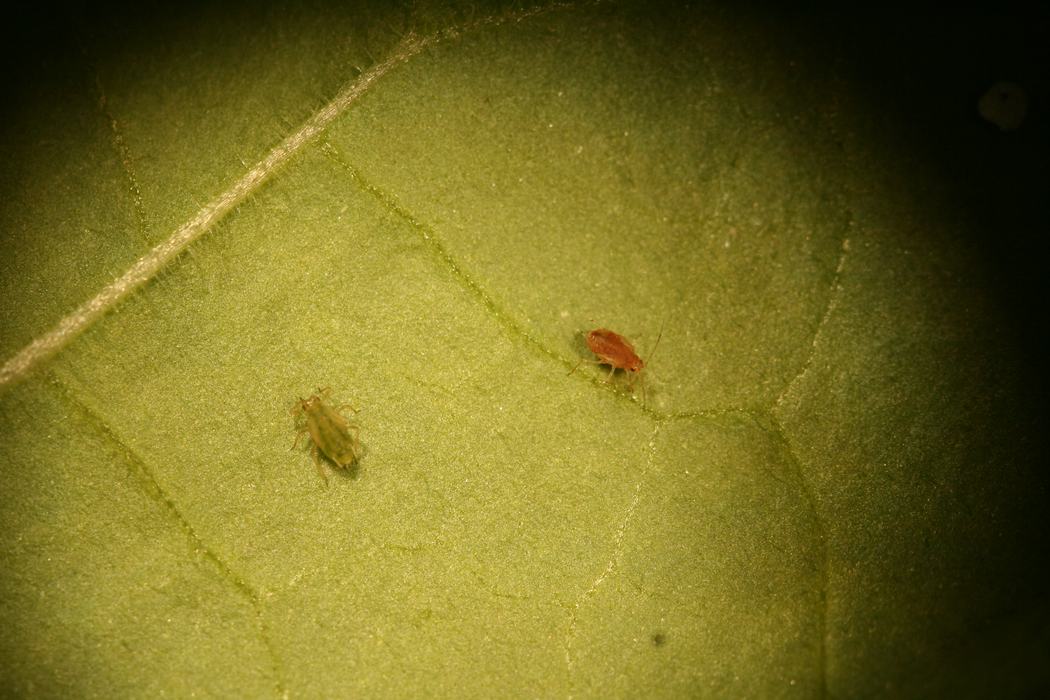
Aphids can be red, orange, or green. All three of these color morphs are the same species--"green peach aphids!"