Characteristics of Calcium Deficiency
- Symptoms usually show up just before or at topping during periods of rapid growth.
- Severity of calcium deficiency can be sporadic. It commonly varies from plant to plant.
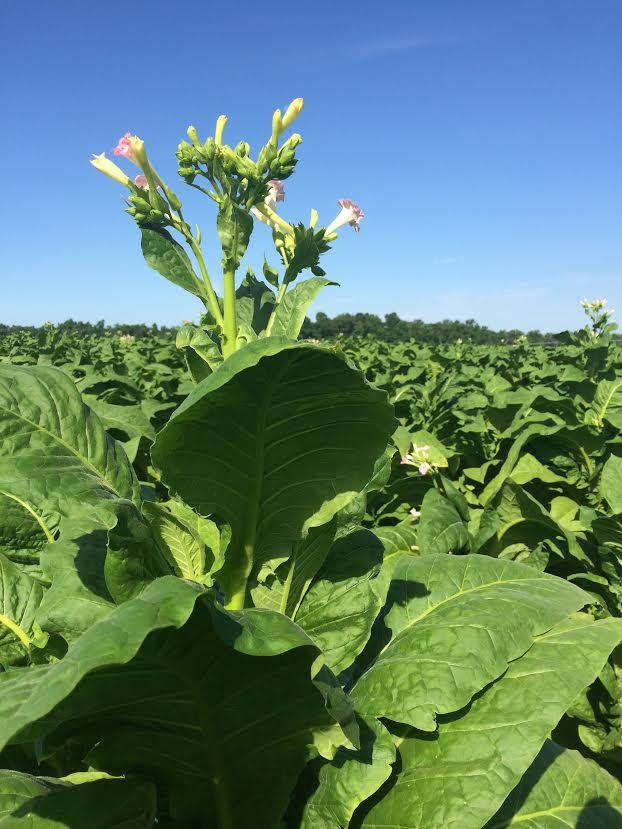
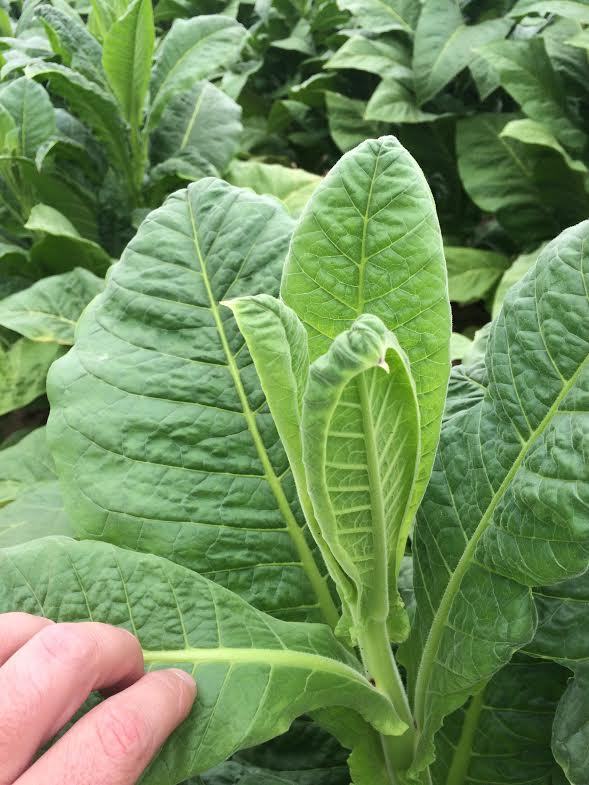
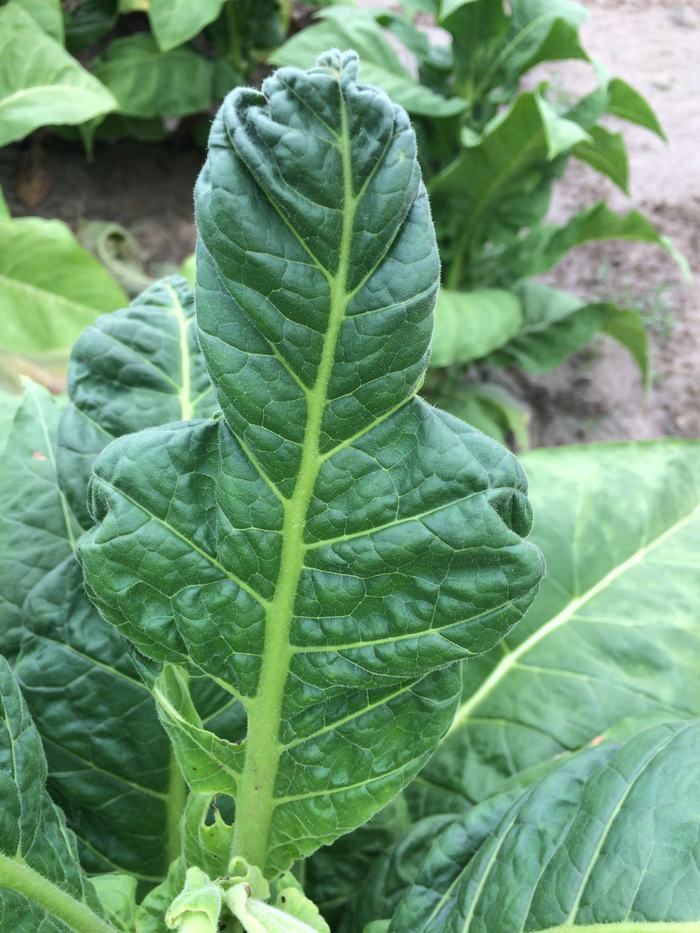
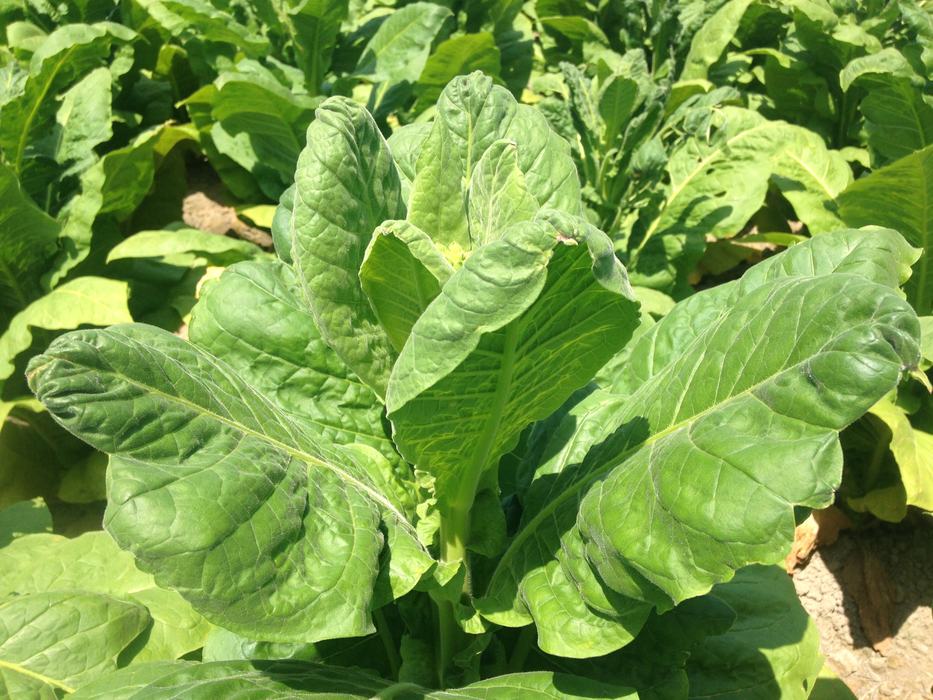
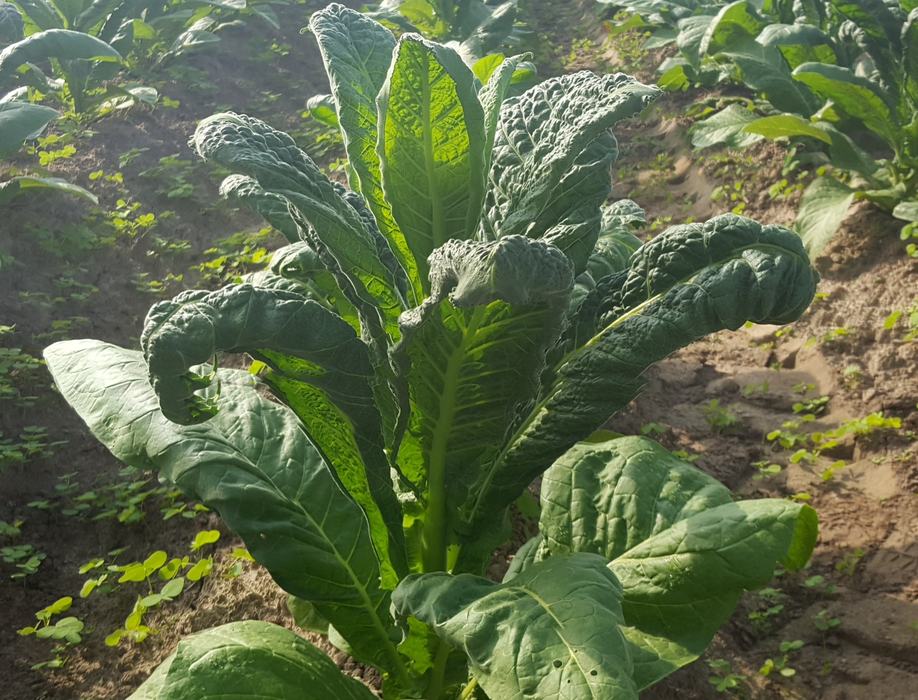
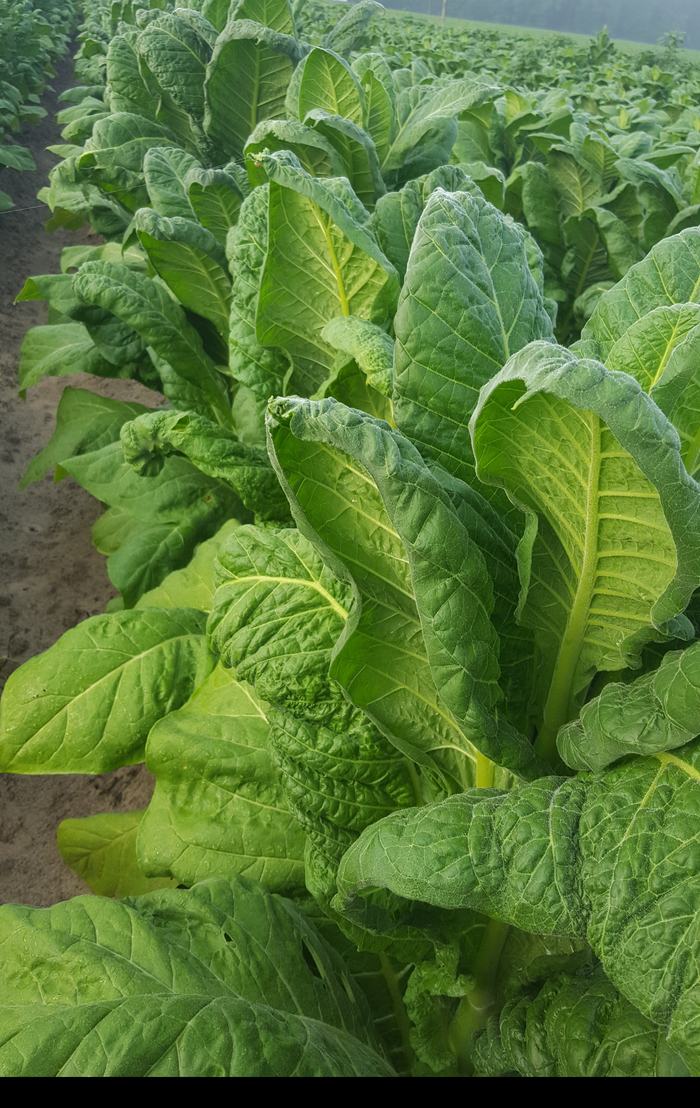
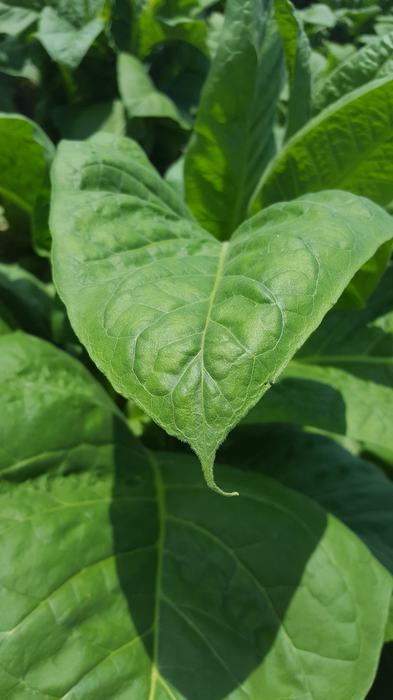
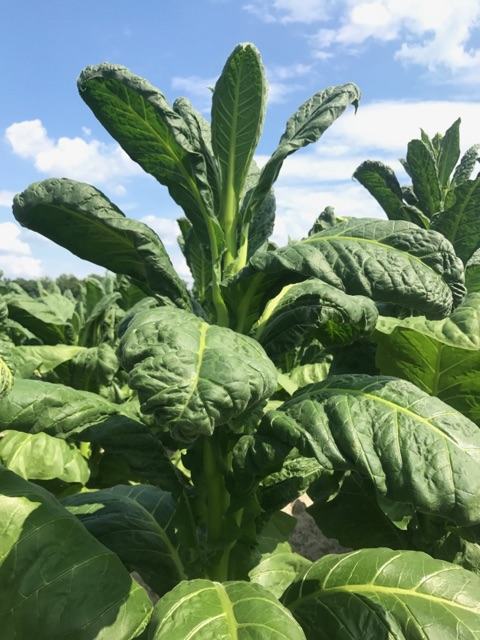
- Symptoms may actually vary depending on severity. In some cases, downward cupping of a good portion of the leaf is present while other times you may see just the leaf tip having a “hooded” appearance and the rest of the leaf margin be ruffled. In addition, calcium deficiency can cause the upper leaves to exhibit more of a “spear or arrowhead” like appearance. (See pictures below).
- Symptoms can be heat/stress induced due to reduction in nutrient uptake and translocation in the plant. In addition, calcium demand is greatest near topping as demand for flower and seed production creates a large sink for nutrients. This is not a soil deficiency as there are ample amounts of calcium present from applications of lime and certain fertilizers.
- Upper leaves become more normal in appearance once tobacco is topped.
Treatment of calcium deficiency: We have applied as much as 50lbs (foliar-downstalk) of calcium per acre and have not documented a yield response when compared to no calcium applied.Even though calcium content was increased in the leaf tissue after application, leaf yield was not increased. More specifically, leaf value (combination of leaf and tips) was not increased from a foliar application of calcium. Based upon lack of response to leaf yield and calcium reserves in the soil (1,045 lbs Ca at 0-6 inches and 1,076 lbs Ca at 6-12 inches), a foliar application of calcium is not recommended. Plants should be topped early to stimulate root growth in order to effectively utilize calcium reserves.
Characteristics of Dicamba
- Severity of symptoms will depend on concentration or dose of drift.
- Young leaves become elongated, usually more than calcium.
- Upper stalk tobacco can be a very dark green color. Calcium deficiency may or may not alter leaf color.
- Leaves can be very thick; leathery feeling. Calcium can result in leaf thickness but usually not as severe as dicamba.
- Leaf tips and edges curl downward, often times a lot more distinct than calcium
- Dicamba will cause vein distortion on younger leaves, calcium will not.
- Leaves that come in contact with dicamba can have a ruffled appearance. Calcium usually does not.
Bottom line: Common sense is required when using the technology. If you see a dicamba sensitive crop (tobacco, sweet potato, cotton, soybeans, fruit trees, gardens etc…) adjacent to where you are spraying and cannot afford to buy it, then you do not need to be spraying.